

Hey everyone,
I got asked, “Is Journey a candy?”
I didn’t know what that was referring to. I knew what the painkiller vs. vitamin metaphor was, but I had never heard of the “candy” option.
I love candy, but it didn’t sound like a positive thing.
Anyways, so I decided to do some reading.
Sarah Tavel’s old post extends the painkiller vs. vitamin framework into a third category she calls “drugs.”
I’ve heard the painkiller/vitamin thing a hundred times, but re-reading it made me think Journey might be candy for most of the people using it right now.
Not for everyone. And not in a fatal way. But more often than I’d like to admit, I think people are using Journey because it’s delightful… not because they need it.
And if that’s true, it explains a lot.
the fun stuff (before we jump into things…)
I use a spreadsheet to run our family budget. I don’t like stuff to be connected to our bank accounts, but more importantly, I like the “manual entry” part of a spreadsheet because it holds my wife and me accountable a little bit.
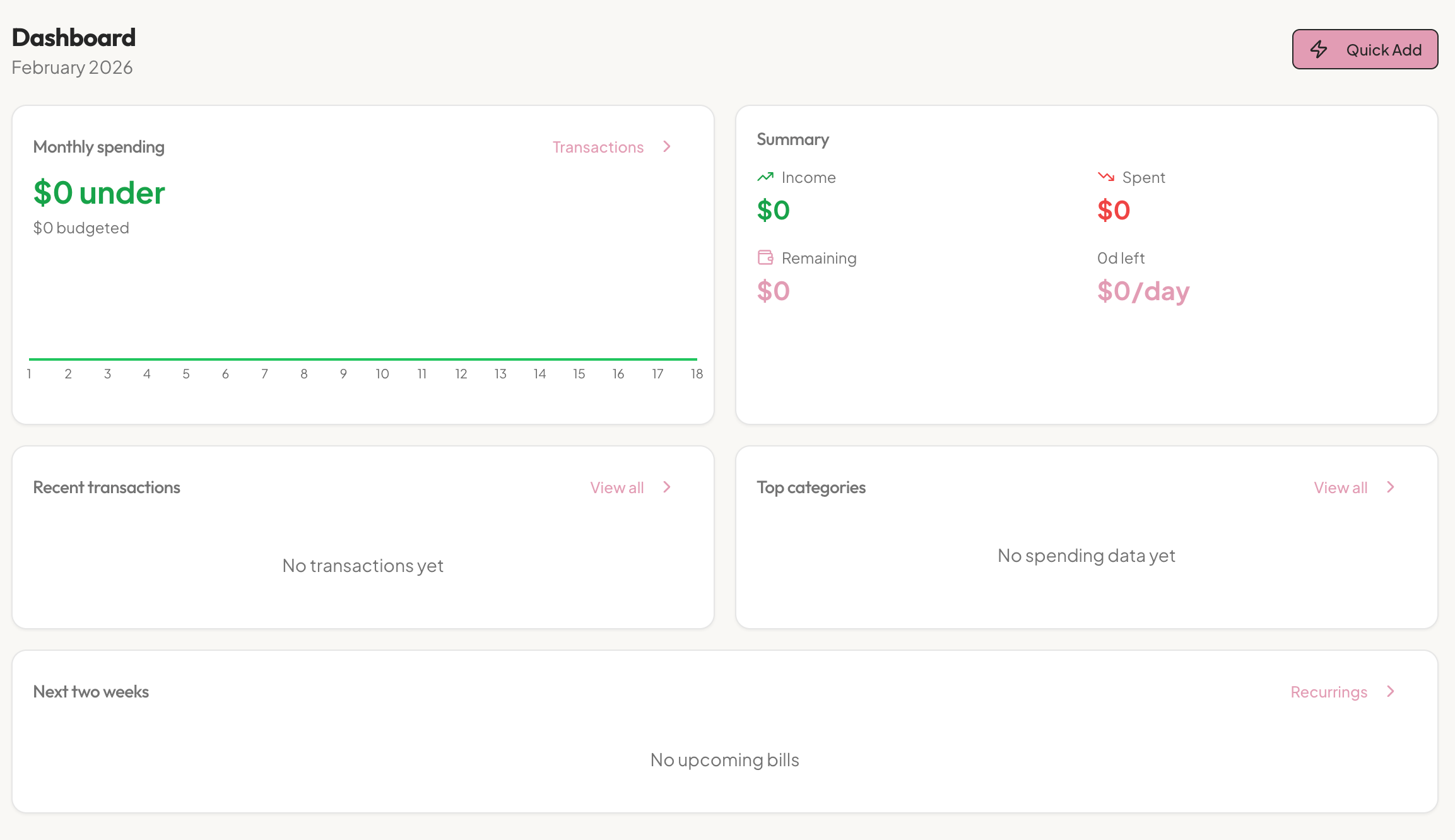
Anyways, over the weekend, I started building a web app version in Replit. Finished it up last night, and I’m excited to boot it up and start using it (my wife is not).
the framework, quickly
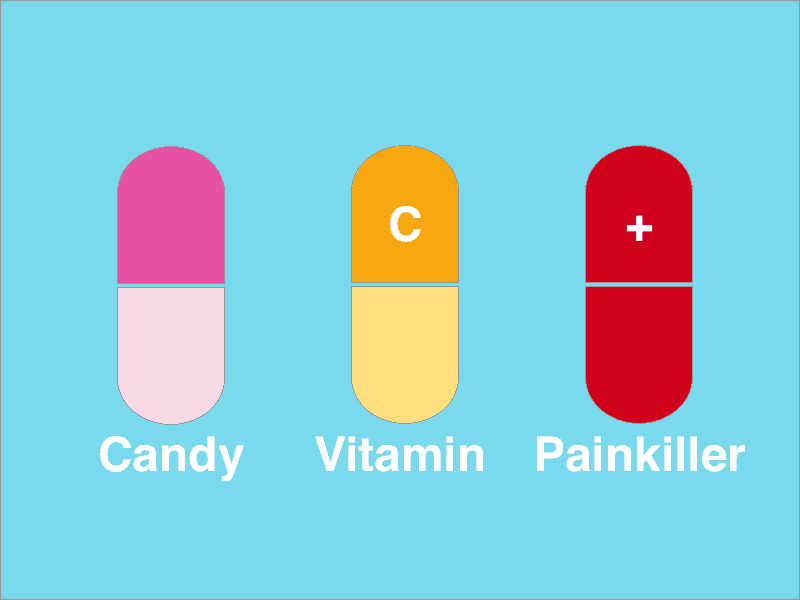
Kevin Fong, a VC in the Bay Area, is credited with breaking business plans into three buckets:
“We divide business plans into three categories: candy, vitamins, and painkillers. We throw away the candy. We look at vitamins. We really like painkillers. We especially like addictive painkillers.”
Painkillers solve urgent, obvious pain. Customers don’t shop around; they just pay. Think Uber. Getting around SF was miserable until it wasn’t.
Vitamins are nice to have. People tell you, “I love this idea,” and then get on with their lives. A lot of SaaS graveyard residents here.
Candy is pleasurable and fun. People use it. They might even love it, but they can live without it. Clash of Clans made $1.5M a day. Candy can work, but it’s a completely different business than a painkiller.
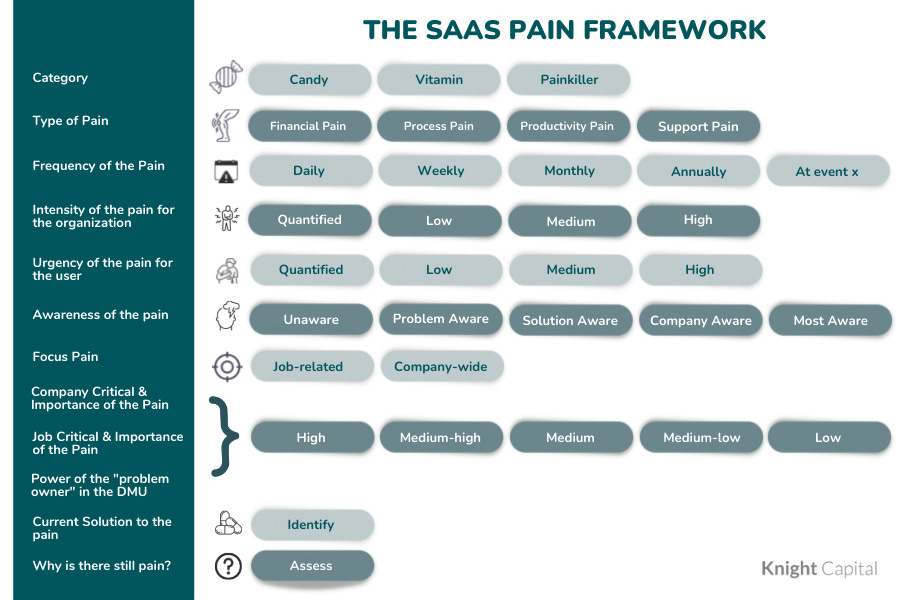
Sarah Tavel adds a fourth: drugs. Like vitamins, drugs can’t harvest existing demand. But unlike vitamins, they become addictive.
Two things make a drug: accruing benefit (the more you use it, the better it gets) and mounting loss (the more you invest, the harder it is to leave).
so where does Journey.io actually sit?
Here’s my honest read.
Journey is a candy-vitamin hybrid, with occasional painkiller moments, and which one it is depends almost entirely on who’s using it.
For the AE who wants to impress a VP of Finance with a beautiful mutual action plan, Journey is candy with some vitamin qualities. They could send a Google Doc, but Journey looks incredible and makes them feel professional. They use it, enjoy it.
For the founder doing their own outbound, staring at an email they sent three days ago, wondering if anyone even opened it? There’s a real pain here. Their emails get ignored. They have no signal. Journey gives them intelligence and a professional presence they can’t manufacture otherwise. That’s closer to a painkiller, but not a drug (not addictive).
For the CRE fund managing 50+ investor relationships across a 6-month fundraise, drowning in reply-all threads and “can you resend that deck”? That’s painkiller territory. Genuine urgency. Real willingness to pay. We have a customer in this segment paying ~$500/month, and they are seeing value.
I’ll get to this in another newsletter, but after some initial tests, I’m finding that it’s not just as simple as “go find more of these and they will also get addicted”. There is nuance to it.
Overall, the problem is that I’ve been building and marketing to all three of these people at once.
where we fall short
We don’t make ourselves hard to leave.
This is the Sarah Tavel “drug” test, and we fail it (for now). There’s no meaningful accruing benefit or mounting loss in Journey today. You create a beautiful link, send it, the deal closes, or it doesn’t, and then you create another beautiful link. Your past Journeys don’t make future ones smarter. The product isn’t learning. Every rep who churns takes everything with them because there’s nothing they’ve built that they can’t rebuild in 20 minutes somewhere else.
I feel like I always sensed this, but it took me several times of going through this Medium post by Sarah Tavel to be able to put my observations into words.
our differentiation is mostly aesthetic.
Beautiful design is real value. It’s not nothing. But it’s not a moat. It’s a headstart someone closes in a couple of weeks.
we’re serving the wrong moment in the funnel.
Journey lives in late-stage sales: that’s where reps use it, where prospects interact with it, where we measure success, but I’m starting to believe the real pain is earlier. It’s in the first 48 hours after a discovery call when a prospect goes cold. It’s in the outbound touch that needs to stand out. That’s when people are most desperate for a signal. That’s when they’d pay anything to know if their prospect is actually interested because, without the initial signal, there really isn’t anything that follows.
This is where I’m starting to maybe start leading into something addictive.
Is there an addiction to value we can build where EVERY exchange of value via content, case studies, videos, PDFs, one-pagers, lead magnets, videos, demos, etc., for a prospect is ALWAYS housed in a beautifully designed Journey?
And does the product today enable such an experience to the users?
the hypotheses I’m actually testing
These are bets. Writing them down forces me to commit.
Hypothesis 1: the engagement data is the real product. we just haven’t built around it.
Right now, analytics are a feature. They should be the spine. Who opened it, how many times, which sections they lingered on, whether they forwarded it — that’s not a dashboard nicety. That’s the difference between a rep knowing they should follow up and knowing exactly what to say when they do.
Hypothesis 2: our ICP isn’t “sales reps”. it’s people who are in active, high-stakes communication cycles with groups of people they can’t afford to lose track of.
CRE funds raising capital. Founders in enterprise sales cycles. Manufacturers with complex products and long evaluation periods. The common thread isn’t industry or company size, it’s situation. They’re in an active communication mode where every missed signal costs real money. That’s the PQS lens I wrote about last week applied directly to our painkiller question. Who is in so much pain right now that they’d pay us to make it stop?
Hypothesis 3: we need a network effect or we’ll always be a feature.
Every Journey link that gets received is a top-of-funnel moment. Every prospect who clicks through and thinks “wait, what is this?” is a potential future user. But we don’t capitalize on it. If receiving a Journey became a reason to create one, we’d have an organic growth loop that compounds. We don’t have that today.
so what?
There’s a line from one of the readings I was going through this week that stuck: if you find yourself convincing the prospect that they have a problem you can solve, chances are you created your solution too early.
We have a product that genuinely solves something for somebody. I talk to those people. They light up. They refer friends without being asked. They use it every week without prompting. The work isn’t to make Journey better for everyone. It’s to find more of those people and then build so deeply around their pain that we stop being a nice-to-have for the masses and become a can’t-live-without-this for a few.
Stop selling candy.
Let’s keep it going.
Cheers, Danny