

Not sure where/how I got on this newsletter, Topline (the home of GTM), but the most recent beehiiv post fell into my inbox at the end of January.
It was both a sigh of relief and a bit of panic because it made me feel somewhat “seen”. I’m not some savvy veteran who’s gone through it all with SaaS entrepreneurship, but I do believe I’ve been smacked in the face enough times to know what pain feels like and to know what resiliency requires.
So when I read this, it felt good to know that I’m not alone… and it took me a bit of time to get over some of my anxiety and find hope.
fun stuff (before we jump into things…)
My eldest is 4. He’s pretty awesome at drawing. I love that he can sit and do this for an extended period of time. Shout-out to my dad who’s the best artist I know for feeding my son’s passion (because I’m trash at drawing).

quick tl;dr on what I read
Again, credit all goes to Topline (none of this is uniquely mine).
Over 80% of public SaaS companies are trading below their 2021 prices.
And here’s big one: the cost to generate a dollar of net new ARR has nearly doubled…from $1.24 to $2.23.
Growth has collapsed.
Median ARR growth for public SaaS companies has cratered from 34% in late 2021 to just 15% in early 2026. There are fundamental shifts in how buyers evaluate and purchase software.
GTM efficiency is in freefall.
While companies have gotten better at profitability (FCF margins up from 0% to 20%), they’ve done it by cutting costs, not by getting better at selling. The underlying economics of customer acquisition have deteriorated badly.
The horizontal play is dead.
Companies trying to be everything to everyone are getting crushed. The winners? Vertical SaaS companies that maintained stable growth and actually improved their GTM efficiency after 2023.
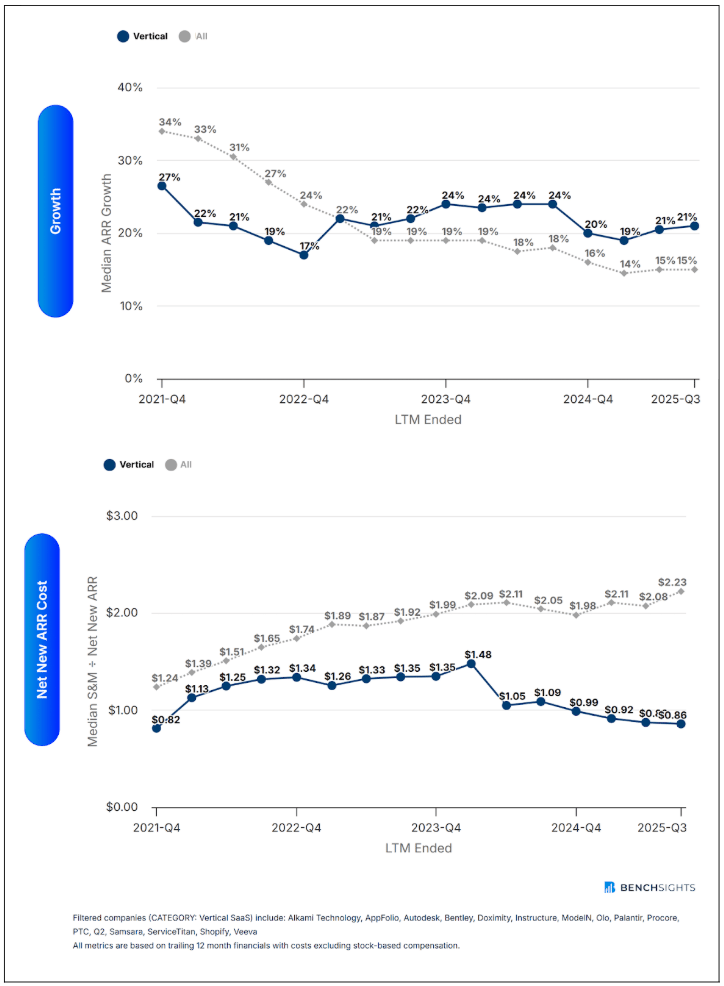
This is the world we’re operating in.
So the whole thing isn’t all bad… there are glimmers of hope towards the end, and here’s how I’m applying it.
the clarity problem
Journey is a horizontal product (not good for us based on the numbers above).
You can use it for sales enablement, customer onboarding, investor relations, event marketing, and recruiting. And that was the problem.
High traffic. Terrible conversion. Customers who used it heavily churned anyway because when you’re everything to everyone, you’re nothing to anyone.
The data from “Beneath the Benchmarks” confirms this:
Vertical SaaS companies are the ones maintaining growth and improving efficiency. They know exactly who they serve and why those customers can’t live without them.
This isn’t new, but it feels “new” for some reason.
Maybe it’s because of how big the world of PLG was. Maybe it’s because I came out of the micro-SaaS world where I bought and sold 9+ single purpose applications selling to anyone and everyone.
I don’t know, but I need to stop trying to sell “Journey” and started selling solutions to specific, painful problems.
the mechanisms for winning
I shared my last post some of the initial discovery that I started to do with a GTM buddy (more on this next week).
I won’t go through the segments that we are testing to hone in on a more vertical approach, but instead want to share a couple of ways I’m rejigging my founder brain
1. Obsessing Over Retention Leading Indicators
The Science of Scaling (referred to this in the last post as well) is clear: PMF isn’t about revenue growth. It’s about whether your customer retention leading indicator correlates with long-term retention.
For Journey, I need to understand what indicators predict retention.
I thought I knew. The previous founders thought they knew. But I don’t think we knew the right answers.
One issue I’m currently facing is that my existing trial sign-ups are no good… meaning that if I used them to develop my indicators, I would be walking along the wrong path because they are not the customers I need.
Therefore, I’m hoping this new GTM approach will help proactively get me in front of the right folks and setup accounts for the right segments.
PS - I’m tempted to get rid of my free trial self-service workflow and require a form/a conversation/a validation step before getting access to a guided, free trial.
Let me know your thoughts on this…
2. Pain-qualified segments
With Steve’s help, we’re building hyper-specific segments:
CRE funds using an investor portal and actively fundraising (we can see this from their website)
Manufacturing companies with complex products and 5+ person sales teams
B2B service founders who are active on LinkedIn
Then we’re crafting messages that make them think: “How does Danny know exactly what I’m dealing with?”
3. “Done-for-you”
When someone signs up for a trial and fits our ICP, I offer to build them a Journey using their actual marketing assets. I scrape their website. I find their case studies. I show them what it could look like.
This doesn’t scale, but it’s okay.
I’m in Stage 1 (PMF), not Stage 2 (GTM Fit).
The Science of Scaling framework is explicit: at this stage, your GTM playbook is “Win At All Cost.” Win means getting customers to their retention leading indicators.
the opportunity
Here’s the thing about what I’m working everyday to embrace: tough times force clarity.
When money was free and growth was easy, you could get away with horizontal positioning and mediocre retention.
Not anymore.
The companies that survive this will be the ones that know exactly who they serve, why those customers can’t live without them, and how to acquire them efficiently.
I’m not there yet with Journey, but I’m closer than I was four months ago.
And in a market where 80% of public SaaS companies are underwater, I’ll take progress over perfection any day.
Crawl, walk, run
Do the right things in the right order.
Stage 1 is about customer success.
Stage 2 is about scalable acquisition.
Stage 3 is about growth and moat.
That’s it for this one. Let’s keep it going.
Cheers,
Danny
Super interesting, Danny. I like the idea of either requiring, or maybe, just adding alongside, a “guided” free trial option. Sounds like the best Journey customers are those that would want to talk, anyway.